

When planning a new kitchen or upgrading appliances in your Richmond home, understanding kitchen range hood requirements is essential for both safety and comfort. Whether you’re using a gas or electric stove, proper ventilation helps eliminate smoke, heat, grease, and cooking odors while preserving your cabinetry and improving indoor air quality. Let’s break down what you need to know before purchasing or installing your next range hood.
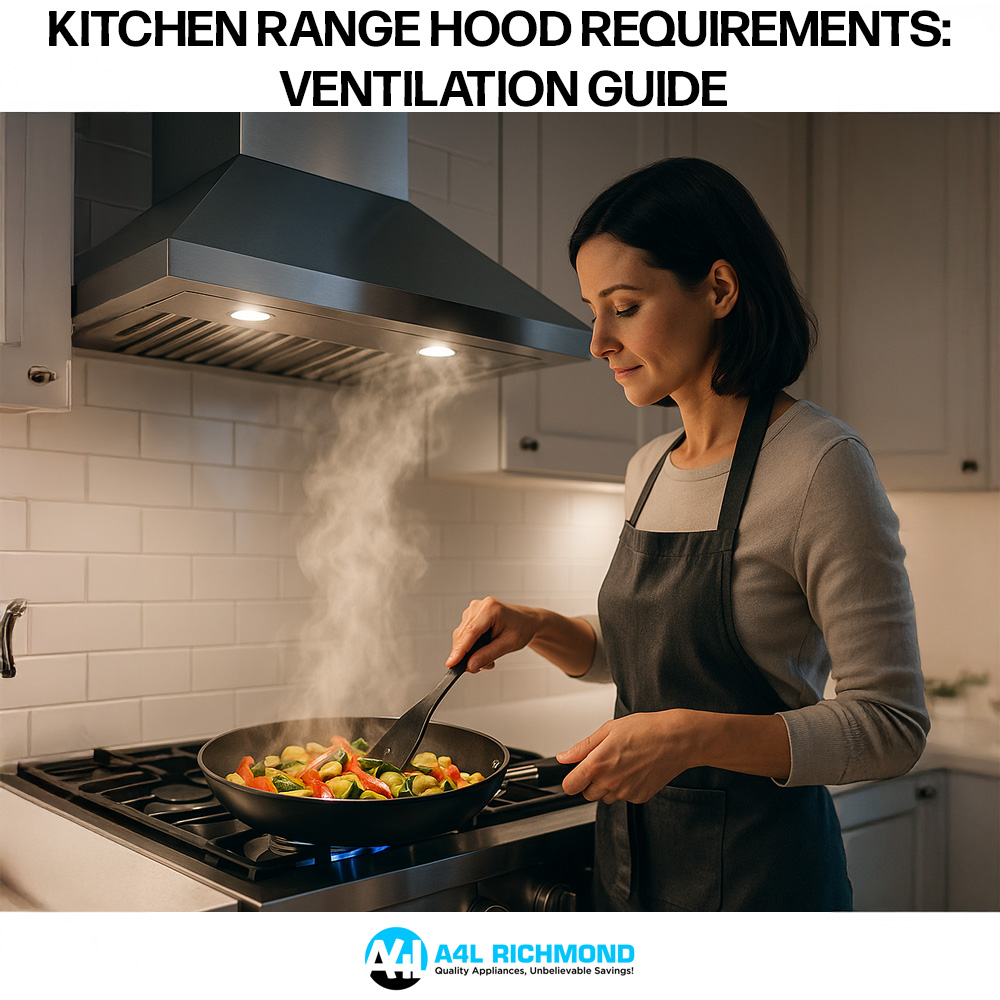
Why Ventilation Matters in the Kitchen
Good ventilation is more than just a convenience; it’s a necessity. With a quality range hood, you’ll keep your kitchen cleaner and healthier. Every time you cook, grease particles, steam, and smoke fill the air. Without an exhaust system, these byproducts settle on surfaces and can lead to lingering odors and even mold growth over time.
In cities like Richmond, where homes often combine open-concept kitchens and living spaces, efficient ventilation becomes even more important. Nobody wants dinner smells sticking around for hours.
Key Kitchen Range Hood Requirements
1. Venting Style: There are two main types: ducted (vented to the outside) and ductless (filtered and recirculated). Ducted range hoods are preferred for high-performance cooking, especially with gas stoves or commercial-style ranges. Local building codes in Richmond often require external venting in new constructions.
2. Sizing Your Hood: As a general rule, your hood should be as wide as your cooktop—typically 30 to 36 inches. For better capture, some homeowners opt for slightly wider hoods, especially over larger gas stoves.
3. Mounting Height: The recommended height between the stovetop and the hood is usually 24 to 30 inches for electric ranges and 27 to 36 inches for gas. Too low, and it interferes with cooking. Too high, and it reduces effectiveness.
4. CFM (Cubic Feet per Minute): CFM measures how much air the hood can move. A typical home range hood should have at least 100 CFM per 10 inches of stove width. If you’re using a gas range, especially with BTUs over 50,000, you may need a much higher CFM to handle the heat and emissions.
5. Filters: Metal baffles or mesh filters are reusable and trap grease well. Charcoal filters are used in ductless models to remove odors, but need replacement every few months. Keeping filters clean maintains airflow and ensures your kitchen ventilation system works efficiently.
6. Noise Level: Measured in sones, the lower the sone rating, the quieter the hood. Quiet models range around 1–3 sones, while more powerful ones can be louder. Consider this if your kitchen is part of a shared living space.
Style & Appliances That Match
Whether you’re remodeling or just replacing a hood, it’s smart to consider other kitchen appliances, too. Stainless steel range hoods pair well with refrigerators, microwaves, ovens, and dishwashers in matching finishes. At Appliances 4 Less Richmond, we carry a wide selection of discounted open-box appliances that combine functionality with visual appeal. From gas cooktops to built-in ovens and ventilation hoods, we’ve got you covered
In-Store Help for Richmond Homeowners
Our team at Appliances 4 Less RVA is here to help you choose the right ventilation solution based on your kitchen layout, cooking habits, and appliance choices. Need help installing a ducted range hood or selecting compatible appliances? Stop by our Richmond showroom to speak with our experts and see our inventory in person.
Ready to upgrade your kitchen ventilation? Visit Appliances 4 Less in Richmond and explore an affordable range of hoods and appliances that suit your space and budget.
Kitchen range hood requirements, kitchen ventilation guide, range hood installation, proper kitchen airflow, appliances in Richmond, VA